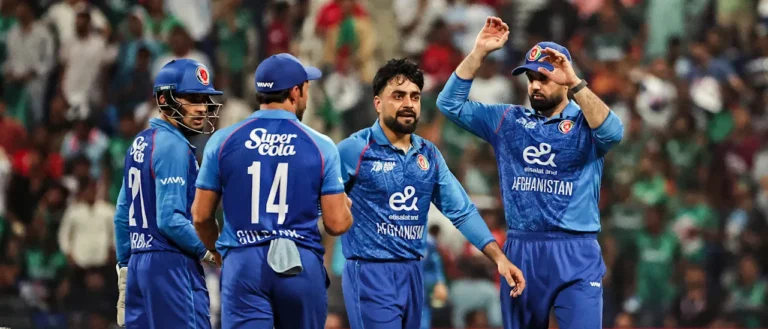
Ali Khan’s Viral “KFC Post” After Being Denied India Visa for T20 World Cup 2026 Tournament
A diplomatic visa issue has thrown the USA cricket team into crisis just weeks before the ICC Men’s T20 World Cup 2026 begins. Four Pakistani-origin players selected for the United States squad have been denied entry visas to India, potentially derailing USA’s tournament preparations and raising questions about how visa policies impact international cricket.
Among those affected is veteran pacer Ali Khan, who went viral after posting a humorous yet poignant Instagram story about his visa rejection. The 35-year-old Pakistan-born bowler shared a photo of himself with the caption “India visa denied but KFC for the win,” turning personal disappointment into a moment of levity that resonated across cricket social media.
This isn’t just about one player or one team. The visa complications could affect players from eight nations competing in the tournament, exposing a bureaucratic challenge that international cricket has struggled with for years.
The Four USA Players Affected
USA Cricket announced their 20-member squad for the tournament expecting to field their strongest possible lineup. That plan hit a roadblock when India’s Ministry of Home Affairs denied visas to four Pakistan-born players despite their current US citizenship.
Players Denied Indian Visas:
| Player Name | Role | Birth Place | Previous Pakistan Experience |
|---|---|---|---|
| Ali Khan | Fast Bowler | Attock, Punjab | No international caps for Pakistan |
| Ehsan Adil | Fast Bowler | Sheikhupura | 3 Tests, 6 ODIs for Pakistan (2013-2015) |
| Shayan Jahangir | Batsman | Karachi | No international caps for Pakistan |
| Mohammad Mohsin | All-rounder | Mingora, KP | No international caps for Pakistan |
All four hold American citizenship and have represented USA Cricket in various international competitions. Their exclusion creates significant gaps in USA’s squad composition, particularly in the fast bowling department where Khan and Adil provided experience and skill.
Ali Khan’s Response Explained
Khan’s Instagram story combined humor with subtle commentary on the situation. The “KFC for the win” caption appeared to be a lighthearted attempt to cope with disappointment while possibly referencing that he’ll be watching matches from home with comfort food instead of competing in India.
The post went viral within hours, generating thousands of shares and comments from cricket fans worldwide. Some interpreted it as a dignified response to an frustrating situation, while others saw it as Khan maintaining perspective despite having his World Cup dreams crushed.
In a subsequent video message, Khan confirmed the news more seriously, stating that three Pakistani-origin players (the number was later confirmed as four) were denied visas, preventing their participation in the tournament. His tone shifted from the playful Instagram post to genuine disappointment about missing cricket’s biggest T20 stage.
India’s Visa Rules for Pakistan-Born Individuals
Understanding why these players were denied requires examining India’s specific visa policies regarding Pakistani nationals and Pakistan-born individuals.
Key Visa Policy Points:
- All Pakistan-born individuals must apply using their Pakistani passport, regardless of current citizenship
- Even naturalized citizens of other countries face this requirement if born in Pakistan
- Pakistan passport holders need special clearance from India’s Ministry of Home Affairs
- The approval process can take considerably longer than standard tourist or sports visas
- Security clearances add additional layers of bureaucratic review
These rules exist due to complex geopolitical tensions between India and Pakistan spanning decades. While the policies apply to all Pakistan-born individuals, they create particular complications for international cricket where teams increasingly feature players with diverse backgrounds.
Historical Precedents of Visa Issues
This isn’t the first time Pakistani-origin cricketers have faced visa complications for tournaments in India, nor will it likely be the last.
Previous Visa Denial Cases:
- 2019: Sikander and Saqib Zulfiqar (Netherlands) denied visas
- 2023 ODI World Cup: Shiraz Ahmed faced significant visa delays
- 2017: Usman Khawaja (Australia) experienced visa complications
- 2024: England spinners Rehan Ahmed and Shoaib Bashir faced issues
The pattern suggests systemic challenges rather than isolated incidents. Each case generates controversy within cricket circles and raises questions about whether visa policies should differentiate between individuals representing their birth country versus adopted nations.
Impact on USA’s Tournament Chances
The four denied visas represent roughly 20% of USA’s 20-member squad, a devastating blow to their T20 World Cup 2026 campaign.
Strategic Losses:
- Pace Bowling Depth: Khan and Adil provided experienced fast bowling options crucial in Indian conditions
- Middle Order Batting: Jahangir’s exclusion weakens batting flexibility
- All-Round Balance: Mohsin’s absence removes a valuable all-round option
USA Cricket now faces difficult decisions about potential replacements. However, bringing in new players who haven’t trained with the squad creates integration challenges with limited time before the tournament starts in February.
The team’s preparation timeline has been severely disrupted. Instead of focusing on final tactical preparations and team bonding, USA Cricket must scramble to restructure their squad and game plans.
Which Other Teams Are Affected
USA isn’t the only nation dealing with this issue. Eight countries total have Pakistan-born players in their squads who could face similar visa complications.
Potentially Affected Teams:
- United Arab Emirates
- Oman
- Nepal
- Canada
- England
- Zimbabwe
- Netherlands
- United States
The scale of the problem raises serious questions for tournament organizers. If multiple teams face similar issues, it could undermine the competitive integrity of the T20 World Cup 2026 by forcing teams to field weakened squads through no fault of their own.
ICC’s Role and Response
The International Cricket Council faces pressure to address these visa complications systematically rather than leaving individual players and boards to navigate complex diplomatic situations alone.
Potential ICC Actions:
- Negotiate special tournament visa arrangements with host nations
- Establish clear advance timelines for visa applications
- Create appeal processes for denied applications
- Consider visa policies when selecting future host nations
- Provide diplomatic support for affected players
So far, the ICC has not issued public statements about the USA players’ situation. Their silence contrasts with the vocal frustration from affected players and national boards.
Social Media Reactions
Khan’s KFC post sparked widespread discussion across cricket Twitter, Instagram, and fan forums.
Common Response Themes:
- Sympathy for players missing their World Cup opportunity
- Criticism of bureaucratic processes affecting sports
- Appreciation for Khan’s humor despite disappointment
- Concerns about similar situations affecting other players
- Debates about whether sports should transcend political tensions
The viral nature of Khan’s post brought mainstream attention to an issue that might otherwise have been buried in cricket news. His ability to laugh through frustration resonated with fans who’ve experienced their own bureaucratic nightmares.
What Happens Next for USA Cricket
With tournament kickoff approaching, USA Cricket must quickly adapt to this new reality.
Immediate Priorities:
- Announce replacement players for the four denied visas
- Accelerate integration of new squad members
- Revise tactical plans accounting for personnel changes
- Manage team morale after this setback
- Explore any remaining diplomatic channels for appeals
The timing couldn’t be worse. Teams need settled squads to build chemistry and finalize strategies. Instead, USA enters the tournament with forced last-minute changes that could significantly impact their performance.
Broader Implications for International Cricket
This situation highlights fundamental tensions in modern cricket’s global expansion.
Key Questions Raised:
- Should host nations guarantee visa access for all competing players?
- Do current visa policies contradict cricket’s inclusive values?
- How can the sport protect players from political complications?
- Should tournaments avoid countries with restrictive visa policies?
As cricket continues globalizing with players of increasingly diverse backgrounds, these questions become more urgent. The sport’s governing bodies must develop frameworks that protect players from circumstances beyond their control.
Frequently Asked Questions
Why was Ali Khan denied an India visa for T20 World Cup 2026? Ali Khan was denied because India requires all Pakistan-born individuals to apply using Pakistani passports regardless of current citizenship, and his application was rejected under these special clearance requirements.
How many USA players were denied India visas for the tournament? Four USA players were denied visas: Ali Khan, Ehsan Adil, Shayan Jahangir, and Mohammad Mohsin, all Pakistan-born but currently US citizens.
What was Ali Khan’s KFC post about after visa denial? Khan posted on Instagram saying “India visa denied but KFC for the win,” using humor to cope with missing the World Cup while the KFC reference suggested he’d be watching from home with comfort food.
Which other cricket teams are affected by India visa issues? Eight teams total could be affected including UAE, Oman, Nepal, Canada, England, Zimbabwe, Netherlands, and USA, all having Pakistan-born players in their squads.
Has this visa issue happened before in cricket? Yes, players including Usman Khawaja in 2017, the Zulfiqar brothers in 2019, and England’s Rehan Ahmed and Shoaib Bashir in 2024 all faced India visa complications.
Can the denied USA players still participate in T20 World Cup 2026? Unless diplomatic appeals succeed or policies change, the four denied players cannot participate in matches held in India, though theoretically could play in Sri Lanka-hosted matches if visas were granted there.
The Ali Khan visa denial story combines personal disappointment, diplomatic complexity, and cricket’s ongoing struggle to truly become a borderless sport. As the T20 World Cup 2026 approaches, this situation serves as a sobering reminder that politics and bureaucracy still cast long shadows over international sports, sometimes crushing individual dreams in the process.